Books listed in alphabetical order of author contain a unique collection of literary works that both entertain and inspire. It is known for its distinctive language, vivid descriptions and ability to create characters that captivate from the first page. Each book offers a journey through exciting stories, deep themes, emotions and study that touch the reader. Whether you are looking for drama, suspense or reflective stories, It will be an obvious choice. They appeal to both new and experienced readers who want an experience that will be remembered long after the last page.
Stella Adler
Resumé
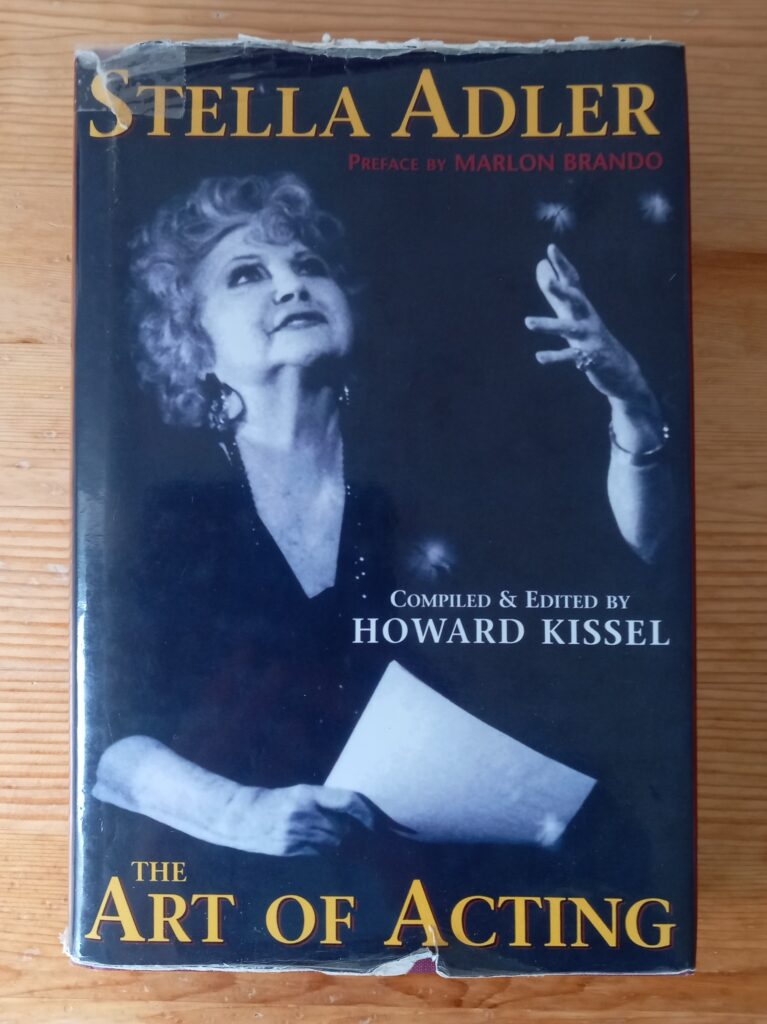
Stella Adler: The Art of Acting distills the powerful teachings of one of history’s most influential acting coaches. Adler, inspired by Stanislavski, emphasizes imagination over personal memory, urging actors to create truth on stage by fully immersing themselves in the world of the character. The book explores core elements like script analysis, voice, movement, and emotional depth, while stressing the importance of cultural awareness and keen observation of life. Adler believes an actor’s imagination and discipline are key to building authentic, powerful performances. More than a guide to acting, it is a philosophy of life rooted in curiosity and creativity.
The Art of Acting
Content
First steps on stage
The World of the Stage Isn’t Your World
Acting Is Doing
The Actor Needs to Be Strong
Developing Imagination
Making the World of the Play Your Own
Getting Hold of Acting’s Control
Learning Actions
Making Actions Doable
Building a Vocabulary of Actions
Instant and Inner Justifications
Complicating Actions
Giving Actions Size
Understanding the Text
Character Elements
Dressing the Part
Learning a Character’s Rhythm
Actors are Aristocrats
Making the Costume Real
The Actor Is a Warrior
Stanislavski and the New Realistc Drama
Portraying Class On Stage
James Allen
Resumé
From Poverty to Power (1901) by James Allen, first published in 1901, is a philosophical guide to personal transformation through disciplined thought and self-control. Allen argues that poverty and hardship arise from negative thinking and that true wealth—both material and spiritual—can be achieved by cultivating positive, focused thoughts. The book is divided into two parts: “The Path to Prosperity,” which emphasizes action, purpose, and willpower, and “The Way of Peace,” which explores inner calm and contentment. With poetic clarity, Allen encourages readers to master their minds to overcome obstacles and live a life of success and fulfillment.
From Poverty to Power

Content
Foreword
Part I: The path of prosperity
1 The lesson of evil
2 The world a reflex of mental states
3 The way out of desirable conditions
4 The silent power of thought; controlling and directing one’s forces
5 The secret of health, success and power
6 The secret of anbounding happiness
7 The realization of prosperity
Part II: The way of peace
1 The power of meditation Star of wisdo,
2 The two masters, self and truth
3 The acquirement of spiritual power
4 The realization of selfless love
5 Entering into the infinite
6 Saints, sages and savoirs: the law of service
7 The realization of perfect peace
Resumé
As a Man Thinketh (1903) by James Allen is a timeless self-help classic that explores the power of thought in shaping a person’s character, circumstances, and destiny. Allen teaches that our minds are like gardens—what we plant and nurture through our thoughts will manifest in our lives. Positive, disciplined thinking leads to growth and success, while negative thinking brings hardship and failure. The book emphasizes personal responsibility, self-mastery, and the link between thoughts, actions, and results. With its poetic and concise style, As a Man Thinketh inspires readers to cultivate noble thoughts, creating a life of purpose, peace, and achievement.
As a Man Thinketh

Content
Foreword
Effect of Thought on Circumstabces
Effect of Thought on Helth and Body
Thought and Purpose
The Thought-Factor in Achievement
Visions and Ideals
Resumé
Out from the Heart

Content
Resumé
Man: King of Mind, Body and Circumstance
Content
Alberts, Johnson, Lewis, Raff, Roberts, Walter
Resumé
Molecular Biology of the Cell (1st Edition) by Alberts, Johnson, Lewis, Raff, Roberts, and Walter is a foundational textbook that explains the complex inner workings of cells with clarity and depth. It introduces the structure and function of cells, emphasizing the molecular mechanisms that drive life processes. Topics include the chemistry of life, genetic information flow, membrane structure, energy conversion, cell communication, and the cytoskeleton. The authors integrate experimental evidence with conceptual frameworks, illustrating how discoveries shape our understanding of cell biology. This first edition set a new standard for teaching molecular biology, combining rigorous science with accessible explanations and detailed illustrations.
Molecular Biology of The Cell 1st Edition
Content
Part I – Introduction to the Cell
Cells and Genomes
Cell Chemistry and Biosynthesis
Proteins
Part II – Basic Genetic Mechanisms
DNA and Chromosomes
DNA Replication, Repair, and Recombination
How Cells Read the Genome: From DNA to Protein
Control of Gene Expression
Part III – Methods
Manipulating Proteins, DNA, and RNA
Visualizing Cells
Part IV – Internal Organization of the Cell
10. Membrane Structure
11. Membrane Transport of Small Molecules and the Electrical Properties of Membranes
12. Intracellular Compartments and Protein Sorting
13. Intracellular Vesicular Traffic
14. Energy Conversion: Mitochondria and Chloroplasts
15. Cell Communication
16. The Cytoskeleton
17. The Cell Cycle and Programmed Cell Death
18. The Mechanics of Cell Division
Part V – Cells in Their Social Context
19. Cell Junctions, Cell Adhesion, and the Extracellular Matrix
20. Germ Cells and Fertilization
21. Development of Multicellular Organisms
22. Histology: The Lives and Deaths of Cells in Tissues
23. Cancer
24. The Adaptive Immune System
25. Pathogens, Infection, and Innate Immunity
Resumé
Molecular Biology of the Cell (2nd Edition) by Alberts, Johnson, Lewis, Raff, Roberts, and Walter expands upon the groundbreaking first edition, offering a more refined and comprehensive exploration of cellular and molecular biology. This edition updates key discoveries in DNA structure, gene expression, protein synthesis, and cell signaling. It delves deeper into topics like cell cycle regulation, intracellular transport, and the molecular basis of cancer. With improved illustrations and clearer explanations, the book integrates experimental approaches with conceptual understanding, making complex mechanisms accessible. The second edition solidifies its reputation as an essential reference for students and professionals in biology.
Molecular Biology of The Cell 2nd Edition
Content
Part I: Introduction to the Cell
Cells and Genomes
Cell Chemistry and Bioenergetics
Proteins
Part II: Basic Genetic Mechanisms
DNA and Chromosomes
DNA Replication, Repair, and Recombination
How Cells Read the Genome: From DNA to Protein
Control of Gene Expression
How Genes and Genomes Evolve
Part III: Methods / Ways of Working with Cells
Manipulating Proteins, DNA, and RNA
Visualizing Cells
Part IV: Internal Organization of the Cell
Membrane Structure
Membrane Transport of Small Molecules and the Electrical Properties of Membranes
Intracellular Compartments and Protein Sorting
Intracellular Membrane Traffic
Energy Conversion: Mitochondria and Chloroplasts
Cell Communication
The Cytoskeleton
Cell-Cycle Control and Cell Death
Cell Division
Part V: Cells in Their Social Context
Tissues and Cancer
Sexual Reproduction: Meiosis, Germ Cells, and Fertilization
Development of Multicellular Organisms
Differentiated Cells and Maintenance of Tissues
Pathogens and Infection
The Innate and Adaptive Immune Systems
Resumé
Molecular Biology of the Cell (3rd Edition) (1994) by Alberts, Johnson, Lewis, Raff, Roberts, and Walter builds on the strengths of previous editions with expanded content, updated research, and improved clarity. This edition provides an in-depth look at fundamental cellular processes, including gene regulation, membrane dynamics, cell signaling, cytoskeletal functions, and the molecular control of the cell cycle. It places greater emphasis on the experimental evidence underlying modern cell biology and incorporates new discoveries in molecular genetics and developmental biology. With enhanced illustrations and refined explanations, the third edition remains a comprehensive and authoritative resource for students and researchers alike.
Molecular Biology of The Cell 3rd Edition
Content
Part I – Introduction to the Cell & Genomes
Cells and Genomes
Cell Chemistry and Biosynthesis
Proteins
Part II – Basic Genetic Mechanisms & Genome Evolution
DNA and Chromosomes
DNA Replication, Repair & Recombination
From DNA to Protein
Control of Gene Expression
How Genes and Genomes Evolve
Part III – Methods / Manipulating and Visualizing Biological Molecules
Manipulating Proteins, DNA & RNA
Visualizing Cells
Part IV – Internal Organization of the Cell
Membrane Structure
Membrane Transport & Electrical Properties
Protein Sorting in Compartments
Intracellular Membrane Traffic
Energy Conversion (Mitochondria & Chloroplasts)
Cell Communication
The Cytoskeleton
Cell Cycle Control & Programmed Cell Death
The Mechanics of Cell Division
Part V – Cells in Their Social Context
Tissue Organization & Cancer
Sexual Reproduction & Development
Multicellular Organism Development
Tissue Maintenance by Differentiated Cells
Pathogens & Infection
The Innate & Adaptive Immune Systems
Resumé
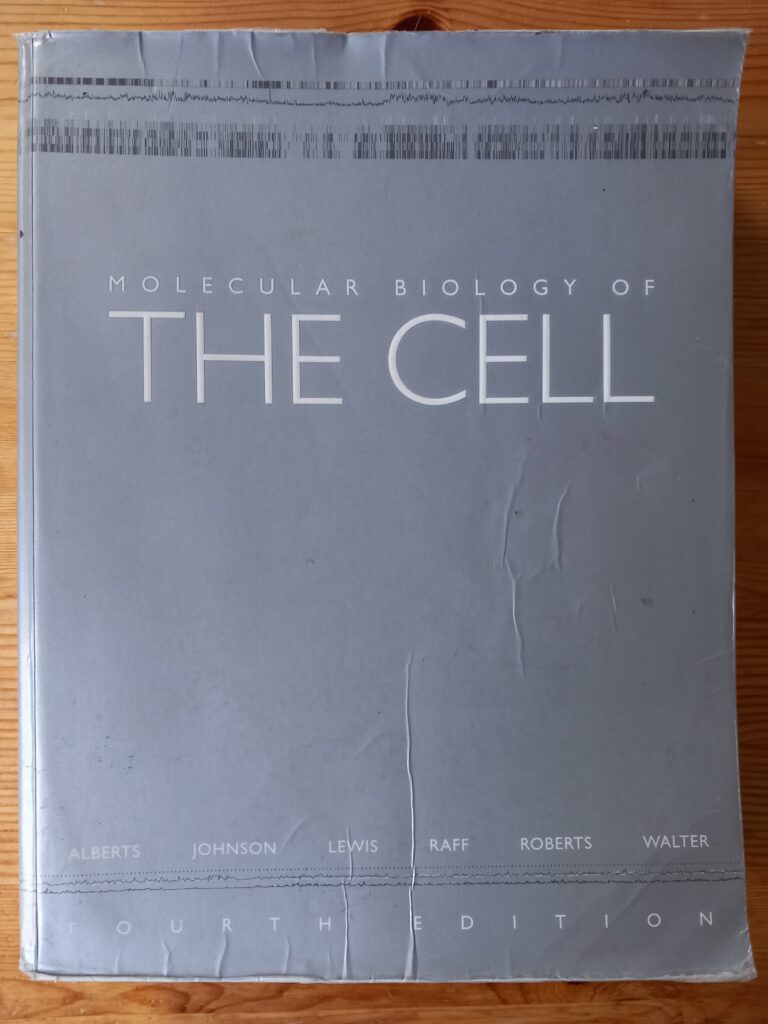
Molecular Biology of the Cell (4th Edition) (2002) by Alberts, Johnson, Lewis, Raff, Roberts, and Walter further refines and expands the foundational material of previous editions, reflecting major advances in molecular and cell biology. This edition offers updated insights into genomics, proteomics, cell signaling pathways, and the molecular mechanisms of disease, particularly cancer and apoptosis. It emphasizes the integration of molecular details with cellular functions, supported by clear diagrams, micrographs, and experimental examples. The 4th edition also introduces improved chapter organization and summaries to enhance learning. It remains an authoritative, comprehensive, and visually rich reference for modern cell biology studies.
Molecular Biology of The Cell 4th Edition
Content
Part I: Introduction to the Cell
The Evolution of the Cell
Small Molecules, Energy, and Biosynthesis
Macromolecules: Structure, Shape, and Information
How Cells Are Studied
Part II: Molecular Genetics
Protein Function
Basic Genetic Mechanisms
Recombinant DNA Technology
The Cell Nucleus
Control of Gene Expression
Part III: Internal Organization of the Cell
Membrane Structure
Membrane Transport of Small Molecules and the Ionic Basis of Membrane Excitability
Intracellular Compartments and Protein Sorting
Vesicular Traffic in the Secretory and Endocytic Pathways
Energy Conversion: Mitochondria and Chloroplasts
Cell Signaling
The Cytoskeleton
The Cell‑Division Cycle
The Mechanics of Cell Division
Part IV: Cells in Their Social Context
Cell Junctions, Cell Adhesion, and the Extracellular Matrix
Germ Cells and Fertilization
Cellular Mechanisms of Development
Differentiated Cells and Maintenance of Tissues
The Immune System
Cancer
Resumé
Molecular Biology of the Cell (5th Edition) (2007) by Alberts, Johnson, Lewis, Raff, Roberts, and Walter presents an extensively updated exploration of modern cell biology, reflecting rapid advancements in research and technology. This edition places greater emphasis on systems biology, stem cells, RNA regulation, and the molecular basis of human disease. It features expanded coverage of cell signaling, gene expression, and the interplay between cellular components. Enhanced illustrations, clearer explanations, and new problem sets make the material more accessible to students while maintaining scientific rigor. The 5th edition continues to be a definitive resource, bridging classic principles with cutting-edge discoveries.
Molecular Biology of The Cell 5th Edition
Content
Part I: Introduction to the Cell
Cells and Genomes (p. 1)
Cell Chemistry and Biosynthesis (p. 45)
Proteins (p. 125)
Part II: Basic Genetic Mechanisms
DNA, Chromosomes, and Genomes (p. 195)
DNA Replication, Repair, and Recombination (p. 263)
How Cells Read the Genome: From DNA to Protein (p. 329)
Control of Gene Expression (p. 411)
Part III: Methods
Manipulating Proteins, DNA, and RNA (p. 501)
Visualizing Cells (p. 579)
Part IV: Internal Organization of the Cell
Membrane Structure (p. 617)
Membrane Transport of Small Molecules & the Electrical Properties of Membranes (p. 651)
Intracellular Compartments and Protein Sorting (p. 695)
Intracellular Vesicular Traffic (p. 749)
Energy Conversion: Mitochondria & Chloroplasts (p. 813)
Mechanisms of Cell Communication (p. 879)
The Cytoskeleton (p. 965)
The Cell Cycle (p. 1053)
Apoptosis (p. 1115)
Part V: Cells in Their Social Context
Cell Junctions, Cell Adhesion & the Extracellular Matrix (p. 1131)
Cancer (p. 1205)
Sexual Reproduction: Meiosis, Germ Cells & Fertilization (p. 1269)
Development of Multicellular Organisms (p. 1305)
Specialized Tissues, Stem Cells & Tissue Renewal (p. 1417)
Pathogens, Infection & Innate Immunity (p. 1485)
The Adaptive Immune System (p. 1539)
Resumé
Molecular Biology of the Cell (6th Edition) (2014) by Alberts, Johnson, Lewis, Raff, Roberts, and Walter is the most comprehensive and up-to-date edition, integrating the latest breakthroughs in cell and molecular biology. It emphasizes the dynamic nature of cells, highlighting advances in genome editing, cell signaling, and systems biology. This edition includes enhanced visuals, detailed experimental insights, and updated content on stem cells, cancer biology, and intracellular transport. Designed for clarity and depth, it balances foundational concepts with emerging research, making it an essential reference for students, educators, and researchers seeking a thorough understanding of cell biology’s molecular mechanisms.
Molecular Biology of The Cell 6th Edition
Content
Part I: Introduction to the Cell
Cells and Genomes
Cell Chemistry and Bioenergetics
Proteins
Part II: Basic Genetic Mechanisms
DNA, Chromosomes, and Genomes
DNA Replication, Repair, and Recombination
How Cells Read the Genome: From DNA to Protein
Control of Gene Expression
Part III: Ways of Working with Cells
Analyzing Cells, Molecules, and Systems
Visualizing Cells
Part IV: Internal Organization of the Cell
Membrane Structure
Membrane Transport of Small Molecules and the Electrical Properties of Membranes
Intracellular Compartments and Protein Sorting
Intracellular Membrane Traffic
Energy Conversion: Mitochondria and Chloroplasts
Cell Signaling
The Cytoskeleton
The Cell Cycle
Cell Death
Part V: Cells in Their Social Context
Cell Junctions and the Extracellular Matrix
Cancer
Development of Multicellular Organisms
Stem Cells and Tissue Renewal
Pathogens and Infection
The Innate and Adaptive Immune Systems
Resumé
Molecular Biology of the Cell (7th Edition) (2022) delivers a fully revised and richly updated exploration of cellular and molecular biology, incorporating groundbreaking findings from human genome sequencing, tumor biology, COVID‑19 and mRNA vaccine research, biomolecular condensates, DNA loop extrusion, and cryo‑electron microscopy discoveries such as mechanosensitive Piezo channels. Every chapter has been significantly enhanced with new figures and clearer visuals, while the companion “Problems Book” is now offered as an interactive Digital Problems Book in Smartwork with animations and auto‑grading. This edition remains the definitive resource blending core principles with modern research and teaching tools
Molecular Biology of The Cell 7th Edition
Add Your Heading Text Here
Part I: Fundamentals and Foundations
An Overview of Cells and Cell Research
Molecules and Membranes
Bioenergetics and Metabolism
Fundamentals of Molecular Biology
Genomics, Proteomics, and Systems Biology
Part II: The Flow of Genetic Information
Genes and Genomes
Replication, Maintenance, and Rearrangements of Genomic DNA
RNA Synthesis and Processing
Protein Synthesis, Processing, and Regulation
Part III: Cell Structure and Function
The Nucleus
Protein Sorting and Transport
Mitochondria, Chloroplasts, and Peroxisomes
The Cytoskeleton and Cell Movement
The Plasma Membrane
Cell Walls, the Extracellular Matrix, and Cell Interactions
Part IV: Cell Regulation
Cell Signaling
The Cell Cycle
Cell Death and Cell Renewal
Cancer
Author
Resumé
Books inspire, educate, and entertain readers across every genre and subject. books actively shape learning, preserve culture, and reflect society’s history and values. Readers turn to books to gain wisdom, explore new perspectives, and enjoy unforgettable narratives. Every written work offers the chance to grow, connect, and discover fresh ideas. Books remain a timeless cornerstone of education, creativity, and personal development, guiding minds and fueling inspiration across generations.
Title
Content
Discover the comprehensive list of contents, providing an organized overview of all topics and chapters.